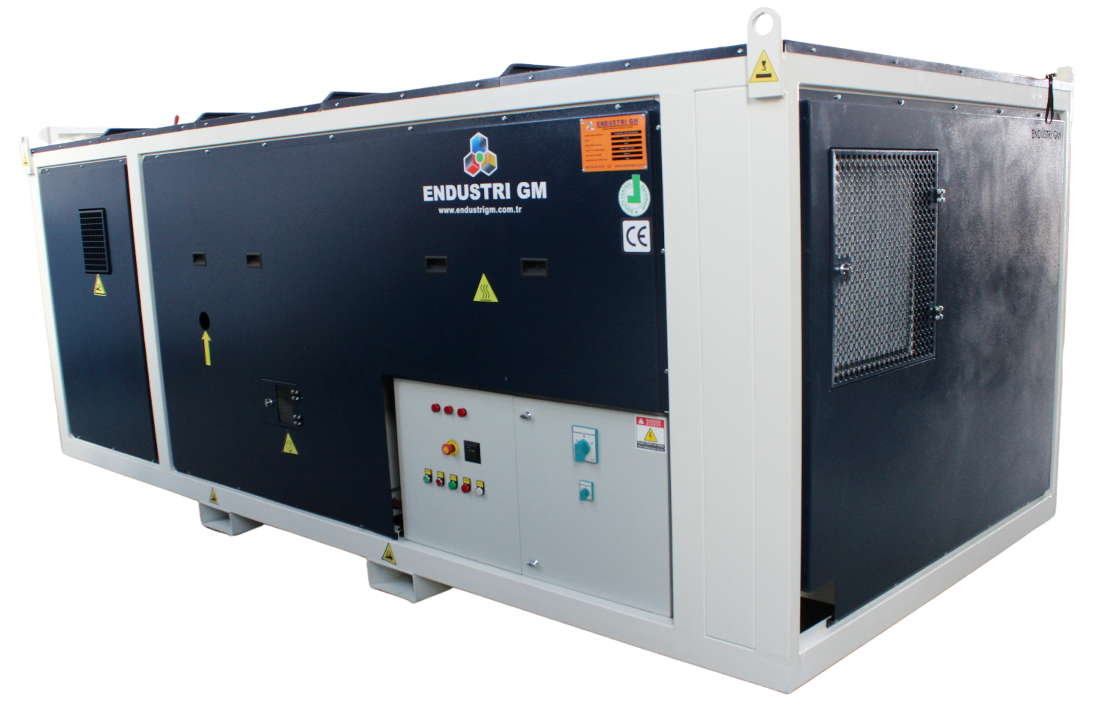

Moisture is an invisible enemy for industrial process areas. It can lead to a wide range of adverse effects—from reduced product quality and equipment damage to corrosion, bacterial growth, and mold. Desiccant Dehumidification Units remove moisture from the air via physical adsorption and ensure precise humidity control even under the most demanding conditions.
Operating Principle
Desiccant dehumidification units operate through a continuous cycle with two separate air streams.
Process Air: The humid air from the environment passes through the process section of the slowly rotating desiccant rotor. The silica gel on the rotor captures moisture molecules from the air. The dried and slightly warmed air is then returned to the environment.
Regeneration Air: As the rotor turns, the saturated section moves into the regeneration zone. Air—often heated with electric PTC heaters to approximately 100–140°C—flows through this section in the opposite direction. The elevated temperature releases the moisture held by the silica gel. The moisture-laden hot air is exhausted from the system.
Areas of Application
Pharma, food, chemical, defense, optics, warehouses, cold rooms.
Advantages
High performance at low temperatures, energy efficiency, long-life rotor, precise humidity control.